Jack Maller’s Twenty One Capital debuts on NYSE

cointelegraphОпубликовано 2025-12-09Обновлено 2025-12-09

Введение

Twenty One Capital, co-founded by Jack Mallers, has begun trading on the New York Stock Exchange under the ticker XXI. The company holds 43,514 Bitcoin, valued at approximately $3.9 billion, making it the third-largest public corporate holder of BTC. Backed by institutions like Cantor Fitzgerald, Tether, Bitfinex, and SoftBank, Twenty One aims to become the largest publicly-traded Bitcoin holder. Beyond accumulation, it plans to develop Bitcoin-based financial products, educational content, and alternative financial services. The firm seeks to strengthen Bitcoin’s role in global markets and provide investors exposure to both Bitcoin’s value and business opportunities built on it.

Institutionally-backed Bitcoin native company Twenty One Capital has launched for public trading on the New York Stock Exchange under the ticker XXI.

The Jack Mallers co-founded company has the ambition of becoming the largest publicly-traded holder of Bitcoin (BTC), and its Tuesday US launch follows the completion of its business combination with Cantor Equity Partners.

Twenty One Capital holds 43,514 Bitcoin, worth roughly $3.9 billion, making it the world’s third-largest public corporate holder of the asset after Michael Saylor’s Strategy and MARA Holdings.

“Bitcoin is honest money. That’s why people choose it, and that’s why we built Twenty One on top of it,” Mallers said on Monday, the day his firm began trading.

“Listing on the NYSE is about giving Bitcoin the place it deserves in global markets and giving investors the best of Bitcoin: its strength as a reserve and the upside of a business built on it.”

In addition to offering investors exposure to Bitcoin, Twenty One Capital intends to develop a “corporate architecture” that supports financial products built with and on Bitcoin, including native lending models and capital market instruments.

The company launched in April with early backing from Cantor Fitzgerald, Tether, Bitfinex and venture capital firm SoftBank. The big-name backers, such as American financial services giant Cantor, provide another institutional endorsement of the asset, which has seen markets and trading dominated by institutions this year.

Twenty One Capital aims to be major player

Mitchell Askew, head of Blockware Intelligence, said, “This isn’t your average DAT whose primary strategy is hiring a C-tier Bitcoin influencer with a few thousand followers to bull post 24/7. The groups backing XXI are connected with the most powerful institutions in the world.”

“Twenty One will be a major player not only in Bitcoin, but in the grand arc of financial history. NOBODY is bullish enough.”

Related: Buy every dip? How pro hodlers blend surgical DCA with rules-based crypto buys

Cantor is a Federal Reserve Primary Dealer led by the sons of the Secretary of Commerce, Tether is the top stablecoin issuer and a major US Treasury holder, SoftBank manages $330 billion in assets, and Mallers founded Strike and comes from a prominent financial family.

On Monday, the company transferred its entire stash of BTC to a new wallet, according to Arkham Intelligence, potentially in preparation for the stock market debut.
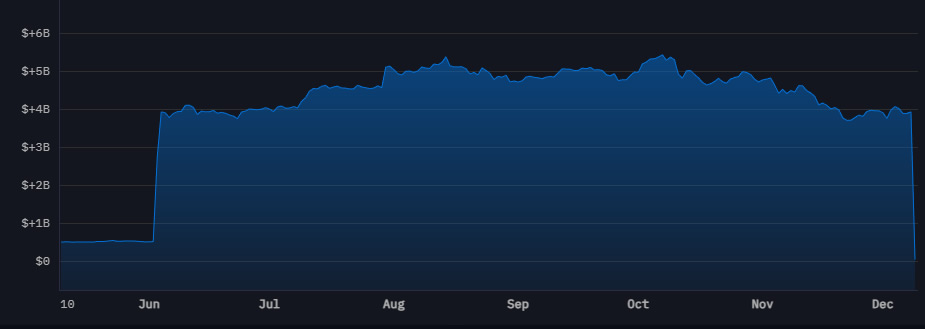
Twenty One Capital moves its BTC stash. Source: Arkham

Twenty One Capital more than just a Bitcoin hodler

Alongside its accumulation strategy, the company plans to establish a set of “Bitcoin-centric operating businesses” aimed at generating recurring revenue and expanding institutional engagement with the asset, according to a recent release.

It will focus on educational content and branded media to support Bitcoin literacy, as well as the rollout of Bitcoin-aligned alternatives to legacy financial services offerings, suggesting that Mallers and co are building an ecosystem, not just accumulating BTC.

Magazine: XRP’s ‘now or never’ moment, Kalshi taps Solana: Hodler’s Digest

Похожее

Institutions Are Taking Over the Crypto Market: Is This the End of Decentralization, or the Prelude to a New Cycle?

The cryptocurrency market is undergoing a structural shift in 2025, with institutional investors now accounting for approximately 95% of capital inflows, while retail participation has declined to 5–6%. According to Aishwary Gupta of Polygon Labs, this transition is driven by maturing infrastructure rather than market sentiment. Major asset managers like BlackRock, Apollo, and Hamilton Lane are allocating portions of their portfolios to digital assets via ETFs and on-chain tokenized products, leveraging public blockchains that meet traditional finance compliance standards. Key drivers include yield generation through tokenized treasuries and institutional staking, followed by efficiency gains from faster settlements, shared liquidity, and programmable assets. While retail investors retreated due to losses from meme coin cycles, Gupta believes they will return as more regulated and transparent products emerge. He argues that institutional involvement does not undermine decentralization; instead, it enhances legitimacy and fosters a hybrid financial ecosystem where DeFi, NFTs, and traditional assets coexist on public chains. Although increased compliance may limit some experimentation, it promotes more sustainable innovation. Looking ahead, institutional liquidity is expected to reduce market volatility and accelerate the growth of real-world asset tokenization and cross-chain interoperability infrastructure. This evolution signals crypto’s transition from a speculative asset to a core component of the global financial system.

比推11 мин. назад

Institutions Are Taking Over the Crypto Market: Is This the End of Decentralization, or the Prelude to a New Cycle?

比推11 мин. назад

World's Richest Man, 'Silicon Valley Iron Man' Musk, to Take SpaceX Public in 2026!

Elon Musk, the world's richest person and CEO of SpaceX, plans to take the company public in 2026 with a target valuation of approximately $1.5 trillion. The IPO is expected to raise "significantly more than $30 billion," potentially making it the largest in history, surpassing Saudi Aramco's 2019 offering. A key driver of this ambitious valuation is a new narrative: **space-based AI computing**. Musk introduced the concept of "space AI compute" at a recent investor conference, arguing that within five years, running AI training and inference in space could become the lowest-cost solution. The core advantages include near-uninterrupted solar power and the vacuum of space acting as an ultimate heat sink. Additionally, with its reusable Starship rockets, SpaceX aims to drastically reduce launch costs to as low as $200–300 per kilogram. This vision, however, faces significant technical hurdles. Challenges include managing extreme heat radiation in direct sunlight, protecting hardware from cosmic radiation, and the economic risks associated with potential launch failures. Competitors are also entering the arena, including Jeff Bezos’ Blue Origin, which is developing its own orbital data centers, and Sam Altman’s OpenAI, which is reportedly considering acquiring a rocket company. Despite the challenges, Wall Street has responded positively. Firms like Ark Invest are now valuing SpaceX as a high-growth AI infrastructure company rather than a traditional aerospace firm, projecting that its space-based compute business could generate $80–120 billion in high-margin revenue by 2030. The success of this new "space dream" hinges on the continued development of Starship, overcoming technical barriers, and navigating future regulatory landscapes.

marsbit26 мин. назад

World's Richest Man, 'Silicon Valley Iron Man' Musk, to Take SpaceX Public in 2026!

marsbit26 мин. назад

Торговля

Спот
Фьючерсы
活动图片